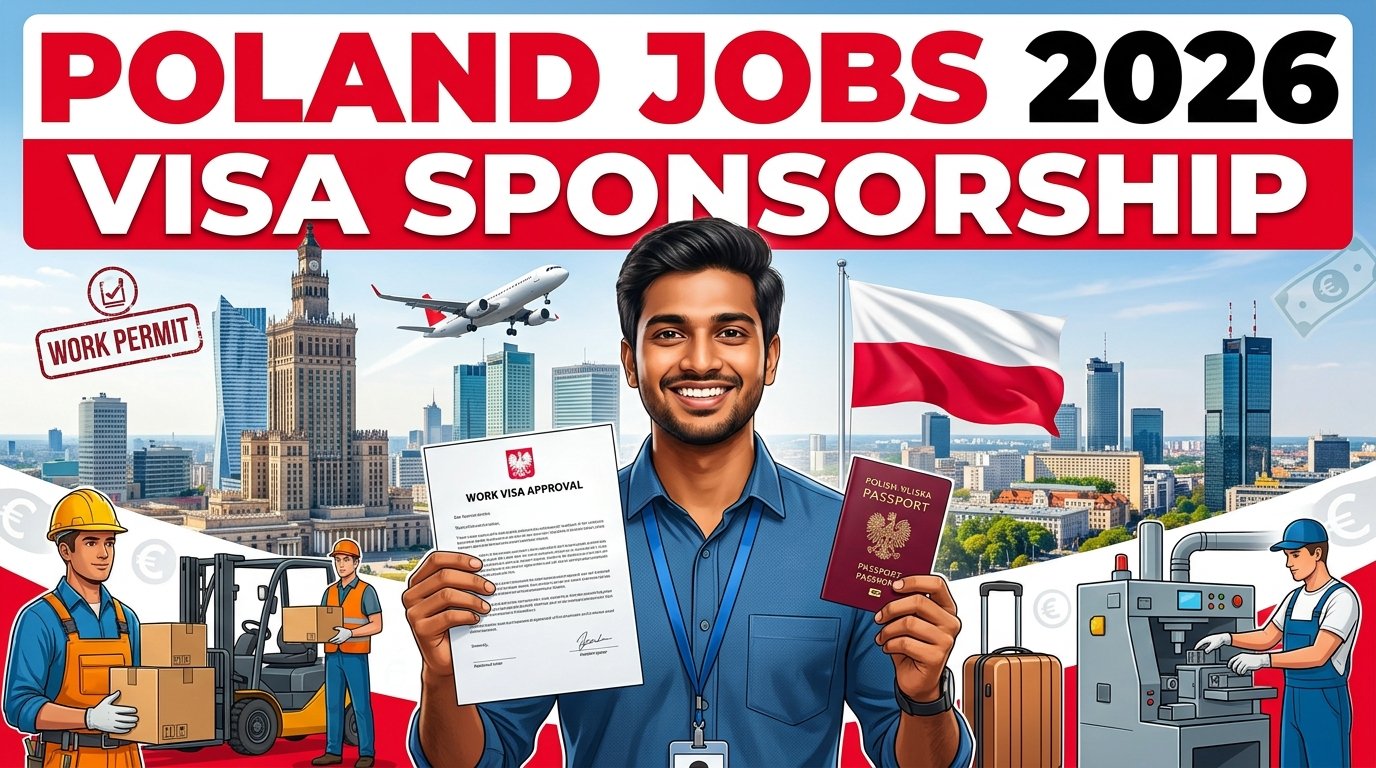
Poland has become one of the fastest-growing job destinations in Europe for foreign workers. With a strong economy, expanding industries, and increasing demand for skilled and unskilled employees, many Polish companies are hiring international workers through visa sponsorship programs. In 2026, Poland is expected to continue offering employment opportunities in sectors such as manufacturing, construction, logistics, healthcare, information technology, hospitality, and agriculture.
Many foreign workers choose Poland because it offers a lower cost of living compared to several Western European countries while still providing competitive salaries and career growth. Working in Poland can also help individuals gain valuable European work experience and open doors to future opportunities within the European market.
This complete guide explains everything you need to know about Jobs in Poland with Visa Sponsorship 2026, including eligibility requirements, work permits, salaries, application process, required documents, and practical tips for finding employment.
Why Work in Poland?
Poland has experienced steady economic growth over the past decade, creating thousands of new jobs across different industries. Many international companies have established offices and production facilities in Poland, increasing demand for qualified workers.
Employees benefit from modern workplaces, labor protections, paid holidays, healthcare access, and opportunities for career development. Poland’s central location in Europe also makes it easy to travel to neighboring countries, making it an attractive destination for international professionals.
What Is a Visa Sponsorship Job?
A visa sponsorship job means a Polish employer agrees to hire a foreign worker and supports the work permit process required for legal employment in Poland.
Before hiring someone from outside the eligible labor market, employers must follow immigration and labor regulations. After receiving approval, the employer provides the necessary documents that allow the employee to apply for a work visa.
Visa sponsorship is especially common in industries experiencing labor shortages.
Who Can Apply for Jobs in Poland?
Foreign nationals from many countries can apply for jobs in Poland if they meet employer requirements and qualify for a work permit.
Applicants with technical skills, vocational training, university education, or practical work experience generally have better employment opportunities. However, some entry-level and seasonal jobs may also be available for workers without advanced qualifications.
Applicants should possess a valid passport, meet health requirements, and satisfy immigration regulations before applying.
In-Demand Jobs in Poland in 2026
Several industries are expected to continue recruiting foreign workers during 2026.
Manufacturing companies regularly hire factory workers, machine operators, quality control inspectors, and production employees.
The construction industry requires electricians, plumbers, welders, carpenters, heavy equipment operators, and general laborers.
Warehouse and logistics companies recruit warehouse assistants, forklift operators, delivery staff, and logistics coordinators because of the continued growth of e-commerce.
Healthcare facilities need nurses, caregivers, healthcare assistants, and medical technicians.
The hospitality sector continues hiring hotel staff, receptionists, chefs, kitchen assistants, and housekeeping employees.
Agricultural businesses also recruit seasonal workers for fruit picking, vegetable farming, greenhouse operations, and food processing.
The IT industry offers opportunities for software developers, cybersecurity specialists, data analysts, and technical support professionals.
Poland Work Permit System
Most foreign workers need a work permit before starting employment in Poland.
The employer usually submits the work permit application on behalf of the employee after offering a job. Once the permit is approved, the worker can apply for the appropriate work visa through the Polish embassy or consulate in their country.
After arriving in Poland, employees may also need to complete residence registration according to local immigration rules.
Understanding the work permit process helps applicants prepare the necessary documents in advance.
Eligibility Requirements
Applicants should meet the qualifications required by the employer for the specific position.
Professional jobs often require university degrees or vocational certificates, while skilled trades require relevant practical experience.
Knowledge of English is useful in many international companies. Learning basic Polish can improve communication, increase job opportunities, and help workers integrate more easily into daily life.
Applicants should also have a clean background record and meet health requirements established by immigration authorities.
Documents Required
Preparing complete documentation is essential for a successful application.
Applicants generally need a valid passport, educational certificates, updated CV, work experience letters, passport-size photographs, and an official employment contract or job offer.
Additional documents may include police clearance certificates, medical reports, and certified translations of official documents when required.
Accurate documentation reduces delays during visa processing.
How to Apply for Jobs in Poland
The first step is searching for employers that hire international workers and provide visa sponsorship.
Applicants should prepare a professional CV that highlights education, skills, certifications, and work experience relevant to the position.
After submitting applications, shortlisted candidates may participate in online interviews. Employers evaluate qualifications, communication skills, and previous experience before offering employment.
Once selected, the employer begins the work permit process. After approval, the employee applies for a work visa and prepares to relocate to Poland.
Salary Expectations
Salary levels in Poland depend on the industry, location, experience, and employer.
IT professionals, engineers, healthcare workers, and financial specialists generally receive higher salaries than entry-level positions.
Construction workers, factory employees, warehouse staff, hotel workers, and agricultural employees earn salaries according to experience, job responsibilities, and regional labor agreements.
Although salaries may be lower than in some Western European countries, Poland’s lower living costs allow many workers to maintain a comfortable lifestyle.
Cost of Living in Poland
One of Poland’s biggest advantages is its relatively affordable cost of living.
Housing, transportation, groceries, and public services are generally more affordable than in many Western European countries.
Major cities such as Warsaw, Krakow, and Wroclaw have higher living costs than smaller towns, but salaries are often higher as well.
Good financial planning allows many foreign workers to save part of their income while enjoying a comfortable lifestyle.
Benefits of Working in Poland
Working in Poland provides valuable international experience and opportunities for career advancement.
Employees benefit from legal workplace protections, paid leave, healthcare access, and professional development opportunities.
Living in Poland also provides access to European culture, modern infrastructure, and convenient travel across the Schengen Area for eligible residents.
Many foreign workers use Poland as a starting point for long-term careers in Europe.
Challenges for Foreign Workers
Finding visa sponsorship can be competitive because employers must comply with labor market regulations before hiring foreign employees.
Language differences may create challenges, particularly in customer service positions. Learning basic Polish can greatly improve daily communication and employment opportunities.
Applicants should also prepare for immigration paperwork and possible waiting periods during visa processing.
Tips to Increase Your Chances
Create a professional CV that clearly highlights your education, technical skills, certifications, and work experience.
Apply for multiple positions instead of relying on one employer. Customize your resume for each job and prepare carefully for interviews.
Learning basic Polish phrases demonstrates commitment and can make a positive impression on employers.
Always verify job offers through trusted recruitment agencies or official employer websites to avoid scams.
Life in Poland
Poland offers a safe environment, rich history, beautiful architecture, and modern cities. Foreign workers often enjoy affordable living, reliable public transportation, and access to quality healthcare.
The country has a growing international community, making it easier for newcomers to adapt and build successful careers.
Many people appreciate Poland’s friendly atmosphere and opportunities for both personal and professional growth.
Future Job Opportunities in Poland
Poland’s economy is expected to continue growing in 2026, increasing demand for workers in manufacturing, logistics, healthcare, construction, technology, and hospitality.
As businesses expand and labor shortages continue, employers are likely to recruit more qualified international candidates through visa sponsorship programs.
Workers with strong qualifications, relevant experience, and good communication skills will have better employment prospects.
Conclusion
Jobs in Poland with Visa Sponsorship 2026 provide excellent opportunities for foreign workers seeking stable employment and a better future in Europe. With growing industries, affordable living costs, and increasing demand for skilled professionals, Poland remains one of the most attractive destinations for international job seekers.
By preparing a strong application, understanding the work permit process, and applying to reputable employers, you can improve your chances of securing a visa-sponsored job and building a successful career in Poland.